
November 2023
In which a newsletter is more like a news post-it note

Create a lump of stone from which you chip out your story sculpture. Stories can live much more cheaply than you realise, with little deterioration in lifestyle.
-Stories in your pocket: how to write flash fiction from The Guardian, David Gaffney
As we read microfiction, we might imagine someone typing away at a computer, constantly checking their word count to make sure they don’t hit the 101-word mark. Or perhaps they type out a tiny scene, then check the length and shave off a few adjectives, remove some definite articles, until they’re at a round one hundred. But many of us who write very brief flash pieces also have a number of longer short stories collecting dust in our drawers, either literal or metaphoric. Perhaps these short stories have seen numerous drafts, expanding and contracting in length, and, though we believe in them, they’ve yet to see the light of day in terms of being published. Perhaps they’ve collected some encouraging rejections, but they continue to have some fatal flaw that keeps them from making it to the page of a journal or anthology. The article quoted above, which we’ve linked, argues that there is value in excision, that a kernel of a much stronger story may remain once we remove the chaff and, as they say, kill our darlings.
There is, of course, no one correct way to write microfiction, but if you’re coming at flash from the experience of writing in longer forms, the surgical route could be a route to success.
A New Story for You:
A Life Lesson from My Father
A story by Jonathan Odell
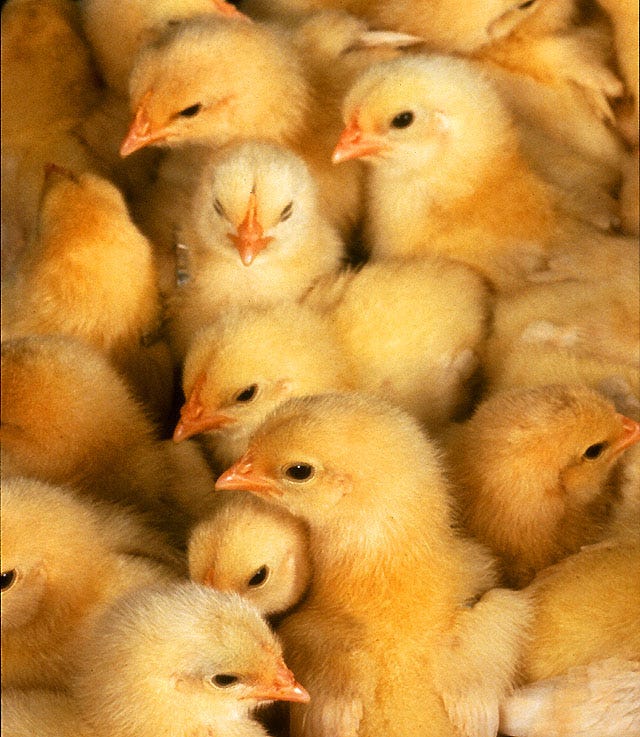
Dad tended chickens, thousands at a time. They were housed in long narrow buildings that looked like barracks. Just hatched, they were like a mighty yellow sea, moving in great waves of fluff as if of one mind. When I was 12, I asked my father if all chicks were yellow. He said no, occasionally a black chick would appear in the mix. But it didn’t live long. The others pile atop and smother him. The tears mystified my father. For the rest of my life, I dreamt of that ocean of uniformity turning as one against the queer one.
A Story From the Archives:

Playing House
A story by Amy Ash
A girl swallows a matchstick, stifles the slow burn in the hollow of her throat. She wants a home, she says, smoke curling from her tongue. Come to my place, the boy offers, kicking aside piles of ashes. She follows him into the flames—hair singed, eyes sealed shut. Painting her eyelids with cinders, she smiles wide into the melting mirror, warped and wounded. Long after the evening is extinguished, her charred heart remains on the bathroom floor. In the morning, still smoldering, she asks for water, and he offers her straw. So much kindling, she thinks. So much warmth.
Book of the month:
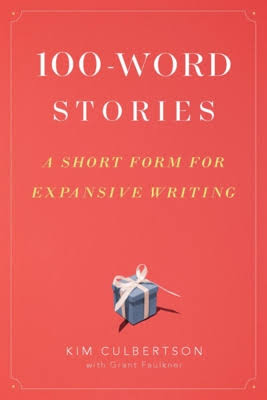
We are thrilled by the release of a new instructional guide for writing 100-word stories, aimed at promoting this micro form in the classroom. Crafting stories is a pastime that often captures the imagination of children, and what better way to introduce them to narrative than through bite-sized stories that can be drafted in one sitting? Kim Culbertson (with the assistance of our very own Grant Faulkner, founder of 100 Word Story) has authored 100-Word Stories: A Short Form for Expansive Writing, which is “a collection of accessible lessons, each with a mentor text that is either student- or author-created”. A book that is easy to dip in and out of, and would work just as well in a school-setting as at home with your creative child.
A PROMPT:
Much like short-short stories, photography captures the ephemeral, the brief, the most minute of moments. An image invites us into our senses, and through them, we might bump into the beginnings of a story. This month, we have this serene fungal photo for you, which we hope will inspire you as it did us. Happy writing!

If you have a photo prompt story to share, submit it in the comments here: